How to Build a Morning Routine That Actually Sticks
Morning routines have become a trend of their own.
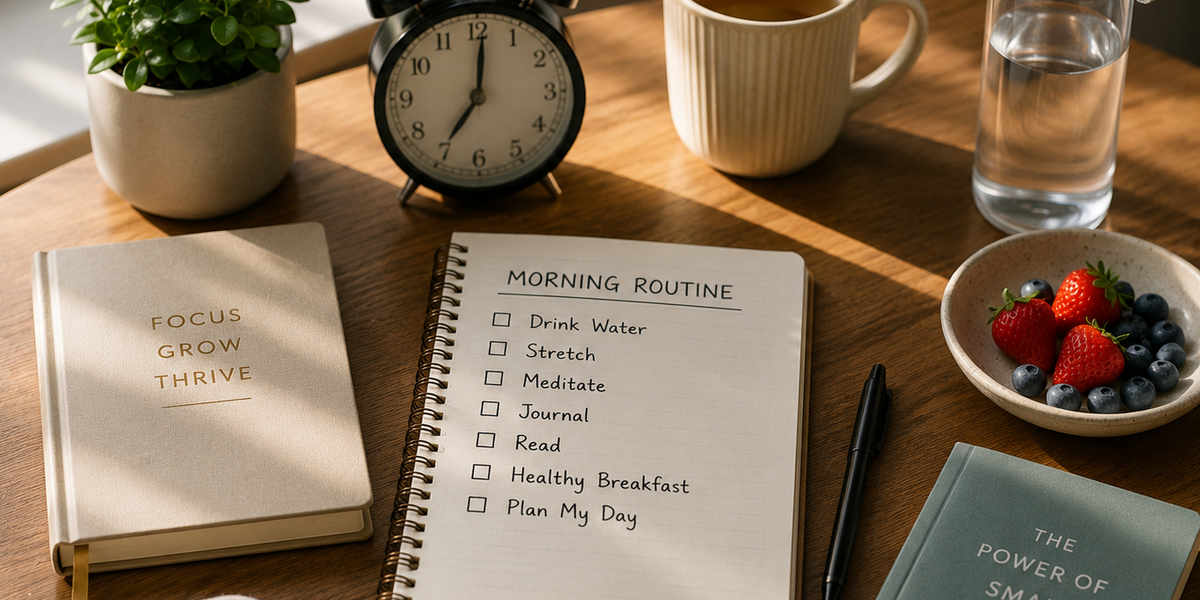
Wake up at 5 a.m. Drink lemon water. Journal. Meditate. Exercise. Read ten pages of a book. Take a cold shower. Eat a perfectly balanced breakfast. Answer emails before most people are even awake.
After scrolling through enough morning routine videos, it’s easy to feel like you’re already behind before your day has even started.
The truth is that the best morning routine isn’t the longest or the most impressive. It’s the one that fits your life and is realistic enough to repeat on an ordinary Tuesday—not just on your most motivated day. A routine only works if you can actually stick with it.
Start with the mornings you already have
One of the biggest mistakes people make is trying to completely transform their mornings overnight. If your current routine involves rushing out the door with barely enough time for breakfast, adding an hour-long wellness routine probably isn’t going to last.
Instead of starting from scratch, take a look at your mornings as they are now. Ask yourself what’s already working, where you usually feel rushed, and what one small change could make the biggest difference. Maybe it’s preparing your clothes the night before, waking up fifteen minutes earlier, packing your lunch in advance, or waiting until after breakfast to check your phone.
Small improvements are much easier to maintain than dramatic lifestyle changes, and they’re often just as effective in helping your mornings feel calmer.
Build your routine around habits you actually enjoy
The most sustainable morning routines aren’t built on discipline alone. They’re built around habits that people genuinely look forward to.
If you hate running, forcing yourself to jog every morning probably won’t become a long-term habit. If journaling feels like another task on your to-do list, there’s no rule saying it has to be part of your morning.
Instead, include activities that make you feel good. That could be stretching for a few minutes, making a proper cup of coffee, reading a chapter of a book, taking a short walk, listening to music, or simply enjoying breakfast without distractions.
A morning routine should help you begin the day feeling better—not create another source of pressure before work even begins.
Give yourself time before checking your phone
For many people, the first thing they see each morning isn’t sunlight—it’s notifications.
Emails, social media, news headlines, and messages can instantly pull your attention toward everyone else’s priorities before you’ve had a chance to think about your own.
While avoiding your phone completely isn’t realistic for everyone, delaying that first check by even twenty or thirty minutes can completely change the tone of your morning.
Those first moments of the day are an opportunity to wake up gradually, think clearly, and decide how you want to spend your time instead of immediately reacting to what appears on your screen.
Keep your routine simple enough for busy days
One reason many morning routines fail is that they’re too ambitious.
Life happens. You’ll oversleep, travel, have early meetings, get sick, or simply have mornings when everything takes longer than expected.
That’s why it’s helpful to create a “minimum version” of your routine. Instead of expecting yourself to complete ten different habits every morning, identify two or three that matter most.
Maybe it’s drinking a glass of water, stretching for five minutes, and eating breakfast before checking your phone. Even on your busiest days, those small habits are realistic enough to maintain.
Consistency matters far more than having the perfect routine.
Let your routine evolve with your life
The morning routine that works for you today may not be the one that works next year.
A new job, becoming a parent, moving to a different city, or changing your schedule will naturally affect how your mornings look. That’s completely normal.
Rather than seeing those changes as failures, think of them as opportunities to adjust your routine to fit your current season of life.
The best routines aren’t rigid. They grow and change alongside you, making them much easier to maintain over the long term.
Focus on how your mornings make you feel
It’s easy to become obsessed with checking every box on a morning routine checklist.
But the real purpose of a morning routine isn’t to complete as many habits as possible before 8 a.m. It’s to help you begin your day feeling calmer, more focused, and less rushed.
If your routine leaves you feeling stressed because you’re constantly trying to fit too much into a short amount of time, it probably isn’t serving its purpose.
A good morning routine should create more peace, not more pressure.
A routine only works if you can keep it
You don’t need a perfectly curated morning that looks impressive on social media. You don’t need to wake up before sunrise or copy someone else’s schedule.
What you need is a routine that works when you’re tired, when life gets busy, and when motivation is nowhere to be found.
The best morning routine isn’t the one with the most habits.
It’s the one you return to again and again because it genuinely makes your mornings—and the rest of your day—feel a little better.