How to Get Better Sleep (Without Quitting Your Phone)
Most people know that looking at their phone before bed probably isn’t the best habit.
Yet for many of us, it’s become part of the nightly routine. We reply to a few messages, check social media one last time, watch a couple of videos, or scroll through the news before turning off the lights. What starts as “just five minutes” often turns into half an hour or more.
While putting your phone away completely before bedtime may sound like the ideal solution, it’s not particularly realistic for most people. The good news is that improving your sleep doesn’t require giving up technology altogether. Often, a few small changes are enough to make a noticeable difference.
Understand why phones affect sleep
It’s not just the screen itself that keeps people awake.
The content we consume also matters. Reading work emails, watching emotionally intense videos, scrolling through social media, or constantly switching between different types of content keeps the brain engaged long after we’ve climbed into bed.
On top of that, bright screens can reduce the body’s production of melatonin, the hormone that helps regulate the sleep-wake cycle. As a result, your brain receives mixed signals about whether it’s time to wind down or stay alert.
Understanding this makes it easier to see that the goal isn’t simply using your phone less—it’s helping your brain recognize when the day is coming to an end.
Create a small buffer before sleep
You don’t have to stop using your phone two hours before bed to improve your sleep.
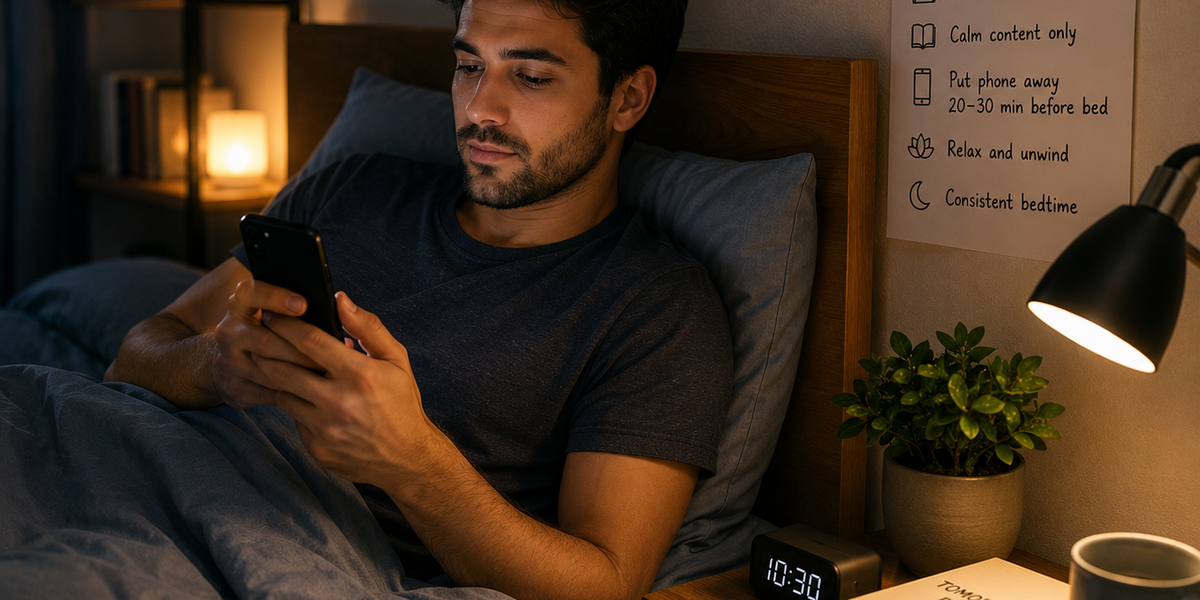
Instead, try creating a short transition between screen time and sleep. Even putting your phone away twenty or thirty minutes before turning off the lights can give your mind time to slow down.
Use that time to read a book, stretch, listen to calming music, prepare for the next day, or simply sit quietly with a cup of herbal tea. These activities signal to your brain that it’s time to relax, making it easier to fall asleep when you finally get into bed.
Small changes are often much easier to maintain than strict rules that feel impossible to follow.
Be more intentional about what you consume
Not all screen time affects sleep in the same way.
Watching an exciting thriller, reading stressful news, replying to work emails, or endlessly scrolling through social media is very different from listening to a relaxing podcast or reading a few pages of an e-book.
If using your phone before bed is part of your routine, try choosing content that helps you feel calmer rather than more stimulated. Avoid conversations or information that leave you feeling anxious, frustrated, or mentally energized just before you want to sleep.
The goal isn’t perfection. It’s reducing the amount of mental stimulation your brain has to process before bedtime.
Keep your bedroom focused on rest
Our brains naturally associate places with certain activities.
If your bed becomes the place where you work, answer emails, watch videos, and scroll through social media every night, your mind may stop associating it primarily with sleep.
Creating a sleep-friendly environment can make a surprisingly big difference. Keep the room cool, dark, and quiet if possible, and avoid spending long periods in bed doing activities that have nothing to do with sleeping or relaxing.
The stronger your brain associates your bed with rest, the easier it becomes to fall asleep when you lie down.
Build a bedtime routine you actually enjoy
Children aren’t the only ones who benefit from bedtime routines.
Adults also sleep better when their bodies receive consistent signals that it’s time to wind down. That routine doesn’t need to be complicated or take an hour.
It might include washing your face, dimming the lights, reading a few pages of a book, stretching for five minutes, writing tomorrow’s to-do list, or practicing a few minutes of deep breathing.
The specific activities matter less than the consistency. Repeating the same calming habits each evening helps your body recognize when it’s time to prepare for sleep.
Don’t chase perfect sleep
Everyone has nights when they struggle to fall asleep.
Stress, travel, illness, late dinners, or unexpected life events can all disrupt your routine from time to time. One bad night’s sleep doesn’t mean you’ve suddenly developed a serious sleep problem.
Instead of becoming frustrated or watching the clock, focus on returning to your normal routine the following evening. Good sleep is built through consistent habits over time, not through trying to achieve a perfect night’s rest every single day.
The less pressure you put on yourself to sleep perfectly, the easier sleep often becomes.
Better sleep starts with small changes
You don’t need to throw your phone away or completely disconnect from technology to sleep better.
What usually makes the biggest difference is creating healthier habits around how and when you use it. A shorter scrolling session, a calmer bedtime routine, a more comfortable sleep environment, and a little time to unwind before bed can all improve the quality of your sleep without making your evenings feel restrictive.
Better sleep isn’t about following a perfect routine.
It’s about giving your body and mind the chance to slow down before the day ends. Those small choices, repeated consistently, can help you fall asleep more easily, wake up feeling more refreshed, and enjoy better energy throughout the day.