The Apps Worth Paying For (And the Ones to Cancel)
Subscription fatigue is real.
It often starts with one streaming service, then a music app, a cloud storage plan, a fitness platform, an AI assistant, a meditation app, and a few “free trials” that quietly become monthly charges. Individually, they don’t seem expensive. Together, they can add up to hundreds of dollars a year.
The good news is that you don’t have to cancel everything. The key is figuring out which apps genuinely improve your life and which have simply become recurring expenses you barely notice.
Before your next billing cycle arrives, it’s worth taking a closer look at what you’re actually paying for.
Keep the apps you use consistently
The best subscriptions aren’t necessarily the cheapest—they’re the ones that provide regular value.
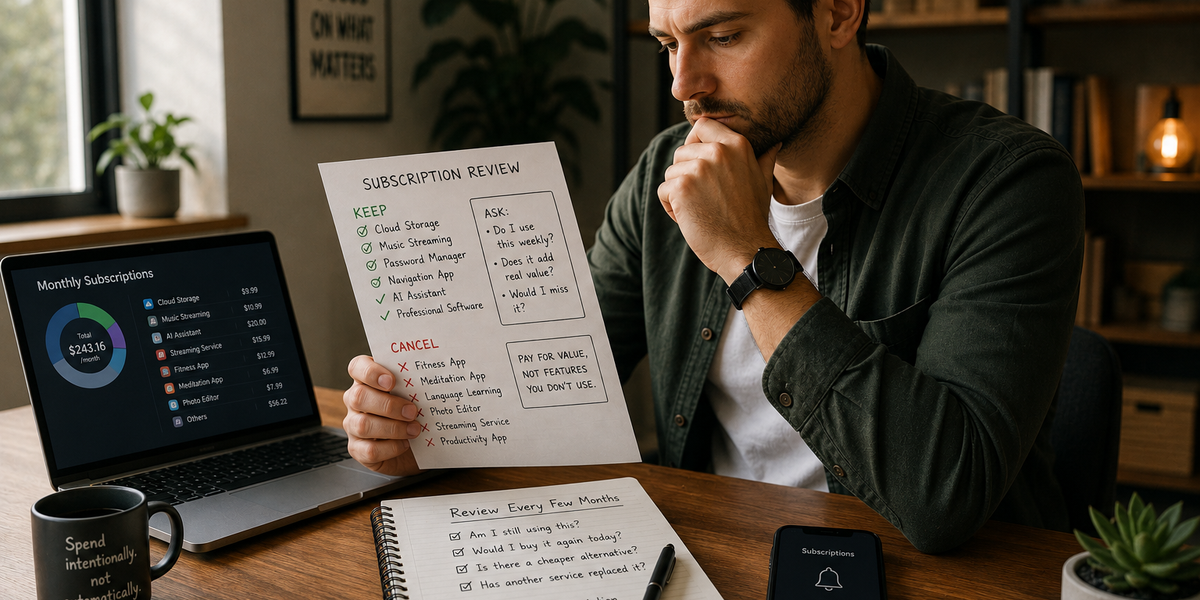
Ask yourself three simple questions:
- Do I use this app every week?
- Does it save me time or make my life noticeably easier?
- Would I miss it if I canceled it tomorrow?
If the answer is yes to all three, it’s probably worth keeping.
For many people, these are the subscriptions that earn their place:
- Cloud storage that automatically backs up important files and photos
- A music streaming service used every day
- A password manager that keeps online accounts secure
- A navigation or travel app that simplifies frequent trips
- An AI assistant that supports work, writing, research, or learning
- Professional software that’s essential for your job or creative projects
The common thread is simple: these apps become part of your routine rather than something you occasionally remember you have.
Cancel subscriptions you’ve forgotten about
Some subscriptions stay active simply because canceling them feels like another task on a long to-do list.
If you haven’t opened an app in months, ask yourself why you’re still paying for it.
Common examples include:
- Fitness apps you stopped using after January
- Meditation apps you intended to try
- Language-learning subscriptions you forgot about
- Premium photo editing tools you rarely open
- Productivity apps replaced by built-in features
- Streaming services you subscribed to for a single show
Many people discover they’re paying for multiple apps that solve the same problem.
For example, you probably don’t need three note-taking apps, two cloud storage subscriptions, or several AI tools that offer similar capabilities.
Simplifying your subscriptions can save money without sacrificing convenience.
Beware of features you already have
One of the biggest reasons people overspend on apps is paying for functionality that’s already included with their devices.
Modern smartphones and computers come with surprisingly capable built-in tools for:
- Notes
- Calendars
- Reminders
- Document scanning
- Password management
- Weather forecasts
- Video calls
- Basic photo editing
- File sharing
Before paying for another subscription, check whether your existing device already offers what you need.
You may discover that a paid app is solving a problem you no longer have.
Pay for quality, not unlimited features
Many premium apps advertise long lists of features you’ll probably never use.
Instead of asking, “How many features does this include?” ask, “Does this solve my problem better than the alternatives?”
A simple, reliable app you’ll use every day is often a better investment than a complex platform filled with advanced tools you never touch.
The same principle applies to AI subscriptions.
If an AI assistant helps you write faster, brainstorm ideas, summarize documents, or automate repetitive work every day, the subscription may easily pay for itself through the time it saves.
If you only use it once every few weeks, the free version may be more than enough.
Choose subscriptions based on value, not potential.
Review your subscriptions every few months
Subscription services are designed to continue quietly in the background.
That’s why it’s worth scheduling a quick review several times a year.
Go through every recurring payment and ask:
- Am I still using this?
- Would I buy it again today?
- Is there a cheaper alternative?
- Has another service replaced it?
You don’t need to justify keeping every subscription forever. Your needs change, and your apps should change with them.
Even canceling two or three unused subscriptions can free up money for something you’ll actually enjoy or use.
Spend intentionally, not automatically
Paying for apps isn’t a bad thing.
In fact, some subscriptions provide exceptional value, helping you stay organized, work more efficiently, learn new skills, or simply enjoy your free time.
The goal isn’t to have the fewest subscriptions possible. It’s to make sure every recurring payment earns its place.
When you regularly review your subscriptions, you’ll spend less on apps you forgot about and more on the ones that genuinely improve your daily life.
That’s a much better return than paying month after month for services you barely remember signing up for.