Why Some People Notice More Than Others
Have you ever been with someone who spots the tiny details everyone else misses?
They notice a friend’s new haircut before anyone says a word. They remember a conversation from months ago. They pick up on subtle changes in someone’s mood, catch small mistakes in a presentation, or notice a beautiful building everyone else walks past without a second glance.
It’s easy to assume these people are simply more observant.
Sometimes they are. But more often, what sets them apart isn’t better eyesight or a naturally sharper memory—it’s the way they pay attention.
Observation is less about what your eyes see and more about where your mind chooses to focus.
Most of us are looking without really seeing
Our brains process an incredible amount of information every second.
If we consciously noticed every sound, face, object, and movement around us, we’d quickly become overwhelmed. Instead, the brain filters out most of what it considers unimportant so we can focus on the task at hand.
That’s why you can drive home without remembering every turn or walk into a room without noticing what’s changed.
You’re seeing everything, but you’re only consciously registering a small fraction of it.
People who seem highly observant often slow this process down. They don’t just glance—they actually look.
They give themselves enough time to notice details that everyone else rushes past.
Curiosity makes people more observant
Observation often begins with curiosity.
People who notice more tend to ask themselves small questions throughout the day.
Why is that building designed that way?
Why does this person seem quieter than usual?
Why is this café always busy?
Instead of moving through life on autopilot, they’re actively engaging with their surroundings.
Curiosity encourages the brain to search for patterns, connections, and details that might otherwise go unnoticed.
The more interested you are in the world around you, the more you’ll naturally begin to notice.
They pay attention to people, not just words
Communication is about far more than what’s said.
Tone of voice, facial expressions, body language, pauses, and eye contact often reveal just as much as the conversation itself.
Someone may say they’re “fine” while looking exhausted.
A colleague might sound confident during a meeting but hesitate before answering certain questions.
A friend may smile all evening while seeming unusually quiet.
People who notice these subtle signals aren’t reading minds.
They’re simply paying attention to the parts of communication that are easy to overlook when we’re busy thinking about what we’re going to say next.
Listening carefully often reveals details that talking never will.
They aren’t always distracted
Modern life competes constantly for our attention.
Phones buzz during conversations.
Music plays while we work.
Notifications interrupt meals.
Even short walks often happen with headphones on and eyes fixed on a screen.
When attention is divided, observation naturally suffers.
People who seem especially aware of their surroundings often have periods where they aren’t multitasking.
They look out of the train window instead of scrolling.
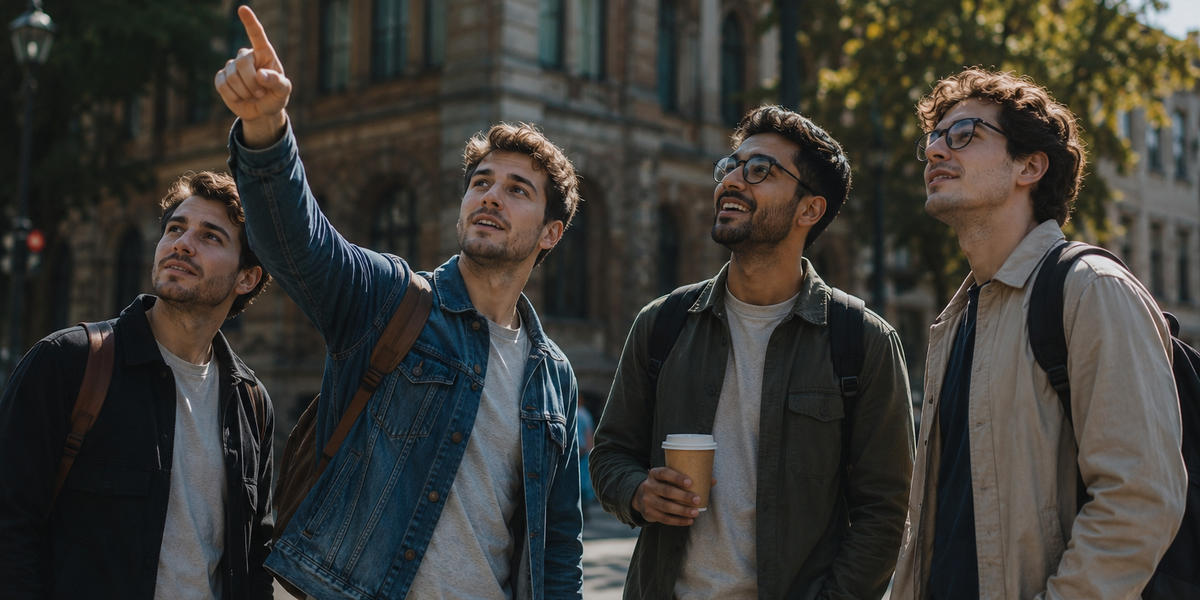
They notice architecture while walking through a city.
They pay attention during conversations instead of glancing at incoming notifications.
Observation requires presence, and presence has become surprisingly rare.
Memory and observation work together
Many people assume observant individuals have exceptional memories.
In reality, observation and memory reinforce each other.
When you pay closer attention to something, you’re more likely to remember it later.
And when you remember details from previous experiences, you begin noticing patterns over time.
That’s why some people remember names so easily or recall conversations months later.
It’s often not because they have extraordinary memories.
It’s because they were fully present when those moments happened.
Attention is the first step toward remembering.
You can become more observant
Observation isn’t a talent reserved for a lucky few.
Like any skill, it improves with practice.
You might start by leaving your phone in your pocket during a short walk and noticing five things you’ve never seen before.
Try paying closer attention during conversations instead of planning your response while the other person is speaking.
Look up when you’re commuting.
Notice the colors, sounds, expressions, and routines that usually fade into the background.
The more often you practice paying attention, the more natural it becomes.
You may be surprised by how much has been happening around you all along.
Paying attention is a gift
In a world that constantly rewards speed, observation asks us to slow down.
It reminds us that life isn’t only found in major milestones or dramatic moments.
It’s also hidden in the small details—a familiar smile, the changing seasons, a thoughtful gesture, a beautiful street you’ve walked down a hundred times without really seeing.
People who notice more aren’t necessarily smarter or more talented than everyone else.
They’ve simply learned something that’s becoming increasingly rare: how to give the present moment their full attention.
And in doing so, they often discover things the rest of us never even realized were there.